Updated June 2026

Idea Godown

Ideas I haven't built, and a couple I decided not to. Each one gets the same treatment: what I noticed, what I checked, and whether it survived contact with the evidence. One is archived because somebody else solved it first — that felt worth leaving visible rather than quietly deleting.

Home Inventory Intelligence

Observation

A house holds a startling number of distinct things — food, cleaning stuff, batteries, the spare filter for the thing under the sink. The system for tracking all of it is opening the cupboard and having a look.

Research

I asked 12 households about it. Every one of them had either bought a second bottle of something they already owned, or run out of a staple mid-week. When they talked about planning meals, the part they kept coming back to wasn't the cooking — it was remembering what was already in the house.

Problem Statement

"Warehouses solved this decades ago. Can a house borrow the idea without turning the kitchen into a warehouse?"

The Idea

Read the receipts, weigh the shelves, and let the house keep its own count. No screen on the fridge — the tracking sits underneath, and you only hear from it when something is about to run out.

Prototype Vibe

A rough dashboard built around how fast things get used up, rather than what's on a list. It ends up looking like warehouse software for milk, eggs and detergent, which is either the joke or the point.
Pulse Adaptive Gaming

Observation

Difficulty is a setting you pick once, at the start. But Hard on a Tuesday night when you're wrung out is a completely different game from Hard on a Saturday morning.

Research

Wristbands already publish heart rate over an API. Almost nobody feeds it back into the game.

Problem Statement

"If the game could see your heart rate, could it hold you at the edge of your ability instead of guessing where that edge is?"

The Idea

A plugin for Unity and Unreal that reads heart rate variability and turns it into a dial the game can pull — how aggressive the enemies get, how tangled the puzzle is.

Prototype Vibe

A horror demo where the monster waits for you to calm down. It only turns up once your heart rate settles, which turns out to be a fairly cruel mechanic.

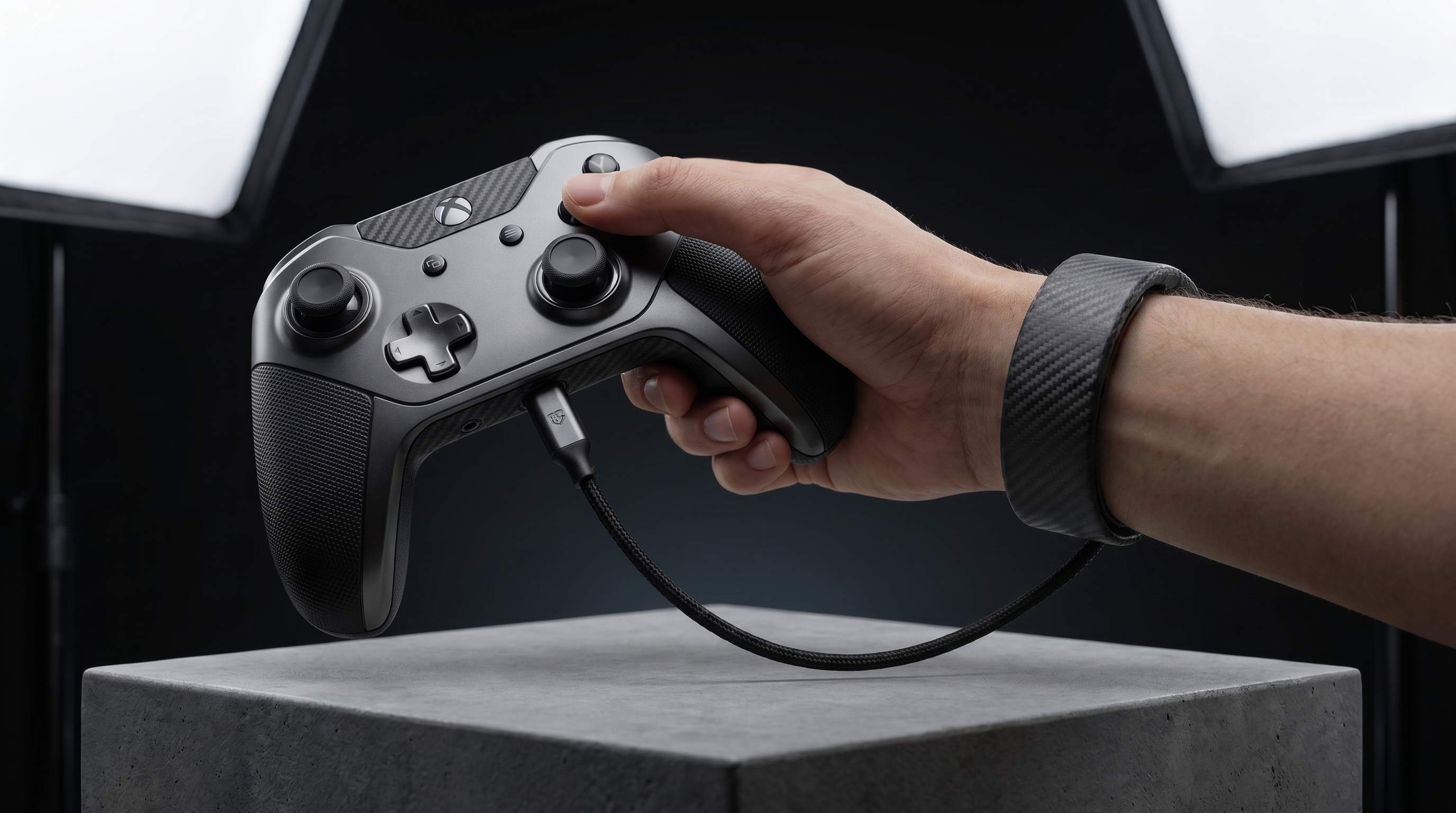
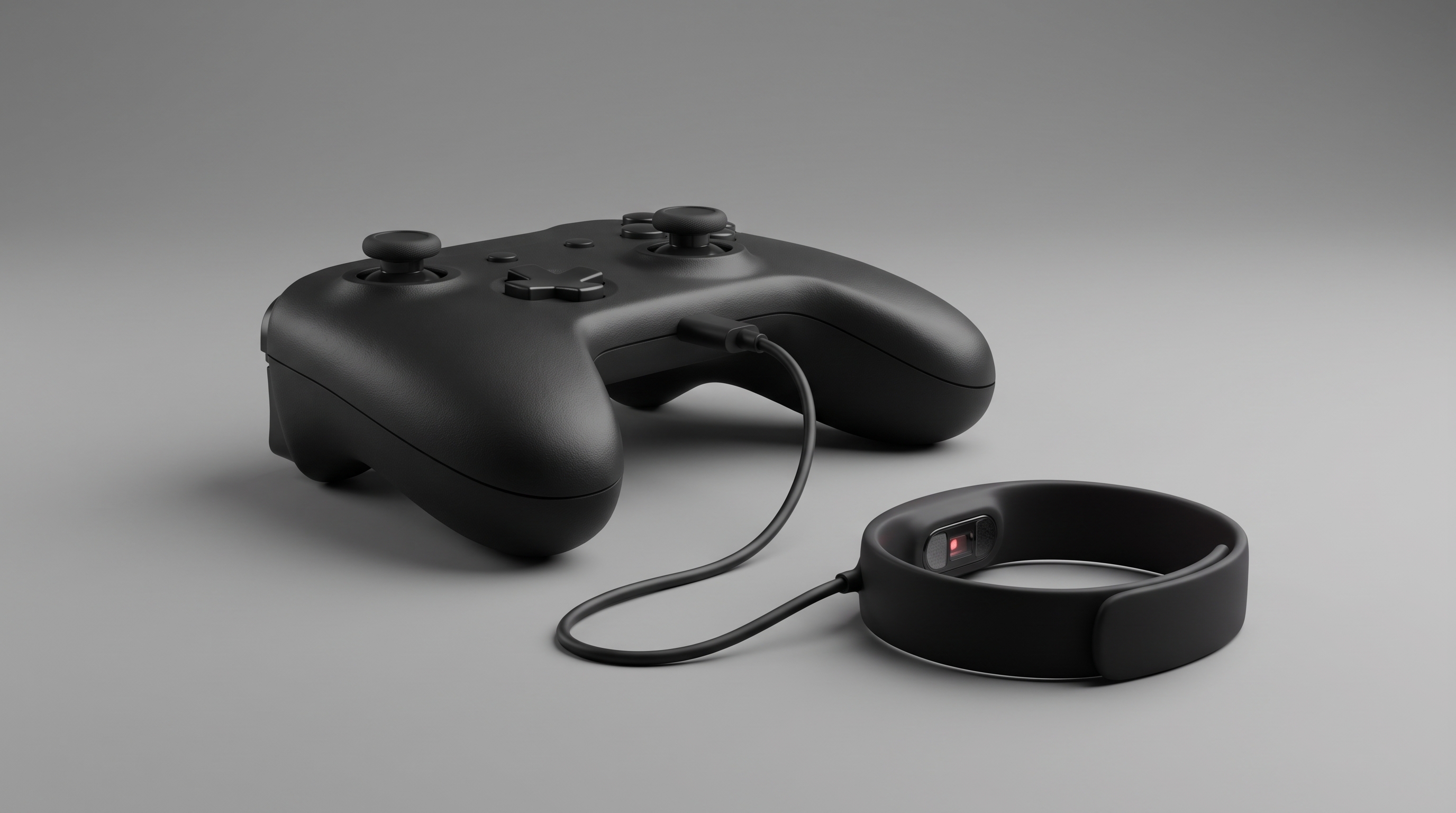
Hardware Concept Renders

Gaming controller prototype connected to heart rate sensor wristband

Desktop prototype showing the custom controller wired to the biometric tracking wristband.

Playtesting using the controller and bio-tracking wristband

Playtesting session demonstrating live heart rate feedback integration via the carbon-weave biometric band.

AI Creative Director for Fitness Creators

Observation

Fitness creators spend longer hunting for trends, formats and audio than they spend filming the actual workout.

Research

The tools out there either help you edit, or tell you what's trending in general. None of them answer the question that actually matters, which is what to do with the clip you just shot.

Problem Statement

"Could something watch the raw footage and suggest a format that suits it, instead of whatever happens to be trending this week?"

The Idea

Upload the raw clip. It works out what the exercise is, checks it against what's doing well in that corner of fitness, and hands back a few editable templates.

Prototype Vibe

Drop in a raw squat video, get back three ways to cut it — an anime power-up, a rep counter, that sort of thing.

AirPods Earrings

Observation

People wear earbuds all day now, the way they'd wear a watch. They still look like something that came out of a plastics factory.

Research

There's already a small market for jewellery that clips around an AirPod so you don't lose it. All of it is a case for the thing, not the thing.

Problem Statement

"Why is the jewellery an accessory to the earbud? Why isn't the earbud the jewellery?"

The Idea

One small driver core that magnets into different earring bodies — a drop, a hoop, a cuff. Change the piece, keep the electronics.

Prototype Vibe

Renders working out where the silversmithing ends and the driver housing begins. Mostly an excuse to find out whether the two can share a shape.

Intelligent Story Companion

Observation

Most people know what they want to say. The hard part is making anyone feel it. The AI tools available will write the thing for you, but none of them will tell you why a story lands.

Research

Story theory, psychology and emotional pacing all exist as separate bodies of work. Nothing puts them in one place a writer can actually use mid-draft.

Problem Statement

"What would it take to build a tool that tells a writer where their story sags, instead of writing a new one over the top of it?"

The Idea

A reader rather than a writer. It reads what you've already got and tells you where the structure gives way.

Prototype Vibe

You ask why a scene isn't working and get an answer about pacing, about payoff, and about whether the character actually changed.

AI Meeting Intelligence

Observation

Everything decided in a meeting survives roughly as long as people's memory of it. Recordings and notes exist. Nobody goes back to them.

Research

The tools in this space are good at transcribing. None of them can tell you why a decision was made, or that it quietly reversed something agreed three weeks earlier.

Problem Statement

"Six months from now, can anyone say why we chose this? That's the question worth building for."

The Idea

Treat the meetings as one connected record instead of a pile of transcripts — decisions linked to the projects they affect and the people who made them.

Prototype Vibe

A timeline of how a project's decisions actually moved and who was in the room when they did. There's a coaching layer too, telling you how you show up in these conversations — that's the part I'm least sure anyone wants.

Design Knowledge Agent

Observation

Designers lose hours looking for their own company's guidelines, and for research somebody already did.

Research

An internal audit put about 30% of rework down to knowledge that existed but nobody could find.

Why I Still Include It

"Other people built this while I was still thinking about it, so as a product it's dead. I've left it up because the thing underneath — organisations forgetting what they already know — still interests me more than most of what's on this page."

The Idea

A model that has read nothing except your company's own Figma files, tickets and research decks.

Market Status

Several startups sell this now. Archived — it's a solved problem, and I'd rather spend the time on one that isn't.